
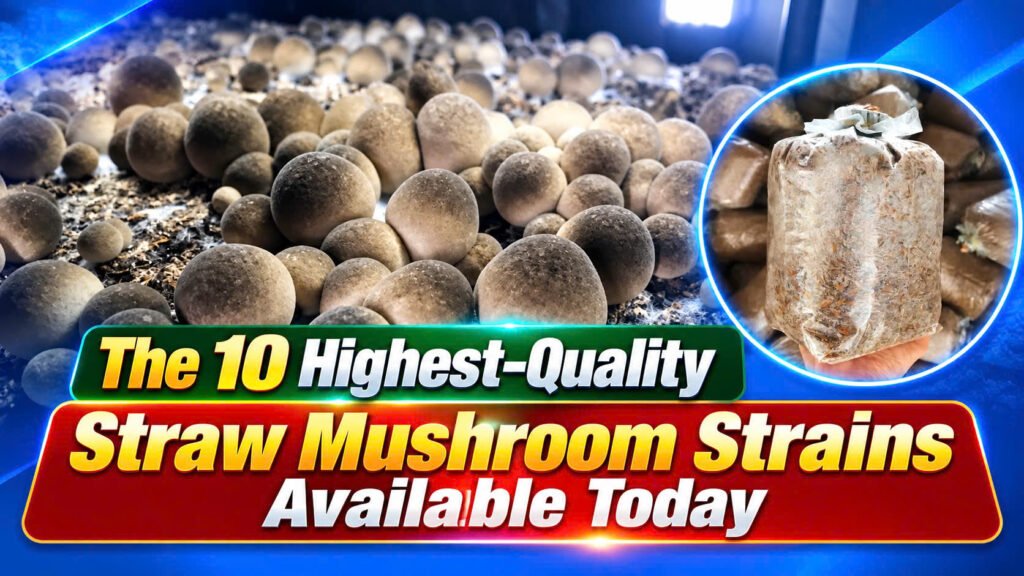
10 High-Quality Straw Mushroom Strains: Selection Guide
To ensure that straw mushroom fruiting bodies form and develop normally, choosing the right high-quality strain—along with maintaining suitable temperature—is one of the key factors determining yield and quality throughout the growing season. In this article, VNmushrooms Farm introduces 10 straw mushroom spawn strains that have been researched and selected for cultivation.
Author: Hong Van Sam — Edible Mushroom and Medicinal Mushroom Specialist. Content Advisor at Làng nấm Bốn Mùa.
First, growers should understand “How to Evaluate the Quality of Straw Mushroom Spawn,” which we introduced in the previous article, so they can select one of the 10 straw mushroom spawn strains below that best matches their cultivation conditions.
10 Selected High-Quality Straw Mushroom Spawn Strains
VNmushrooms Farm has compiled the 10 researched and selected high-quality straw mushroom spawn strains in the table below. Growers can use these characteristics as a reference when selecting a strain for production.
| Strain | Origin | Suitable Temperature | Key Characteristics |
| V23 | Guangdong Provincial Institute of Microbiology, 1960s | Sensitive to low temperatures and dry winds | Early fruiting (6–11 days after inoculation; fruiting-body development 5–7 days); high fruiting-body formation rate but weak tolerance to adverse conditions. |
| V34 | Institute of Microbiology, Hebei Academy of Sciences, 1990s | 24–32°C (mycelial growth); normal fruiting at 23–25°C | Grows well on many substrates; medium-sized, gray-black fruiting bodies. |
| V5 | Guangdong Provincial Institute of Microbiology, early 1990s | Vigorous growth | Fruiting bodies are slow to open; high yield on rice straw and cotton waste. |
| Bình Ưu No. 1 | Tissue isolation in Bình Nam County, Fujian Province | 25–35°C or 28–30°C | High yield; clustered fruiting bodies, 100–200 g each; up to 3 harvest flushes at 5–7-day intervals. |
| V85 | Food Industry Research Institute, Sanming, Fujian, 1991 | 30–35°C (mycelial growth); 28–32°C (fruiting) | High-temperature-tolerant; fruiting season June–September; slow to open its cap; suitable for canning. |
| V35 | Changzhou Vegetable Research Institute, Jiangsu, 1992 (introduced from Australia) | Good heat tolerance | Short production cycle (23–25 days); biological efficiency 16.6% on rice straw or 38.43% on cottonseed hulls. |
| V905 | Hunan Edible Mushroom Research Institute, 1998 | Normal fruiting at 20–25°C (relatively strong cold tolerance) | Early maturing, short growth cycle; biological efficiency 25–41.2%, depending on substrate. |
| V531 | Fuzhou Teachers College, Jiangxi, and collaborators, 1998 | 18–40°C (cultivation environment); 35°C (optimal mycelial growth) | Strong resistance to contamination; large, thick-fleshed fruiting bodies; good eating quality; biological efficiency 21% on rice-straw beds. |
| VP53 | Sichuan Academy of Agricultural Sciences (mutagenesis) | Good cold tolerance (few young fruiting bodies die at 18°C) | Fruiting bodies weigh 15–30 g, with some exceeding 100 g; slow to open their caps. |
| V91 | Shanghai Institute of Plant Physiology (protoplast fusion) | — | Yield comparable to widely used V23; average fruiting-body weight 27.17 g; mycelium can fully colonize the bed surface about 5 days after inoculation. |
Most straw mushroom spawn strains currently available have been obtained through tissue isolation, spore isolation, or, less commonly, through breeding and hybridization.
Recommended reading: How to Isolate Straw Mushroom Mother Culture Using the Correct Technical Procedure.
However, there is currently no unified strain registration system, so the same strain may be sold under different names, while different names may sometimes refer to the same strain. Therefore, growers should pay attention to the actual characteristics and morphology of the spawn rather than relying solely on the strain name printed on the packaging.
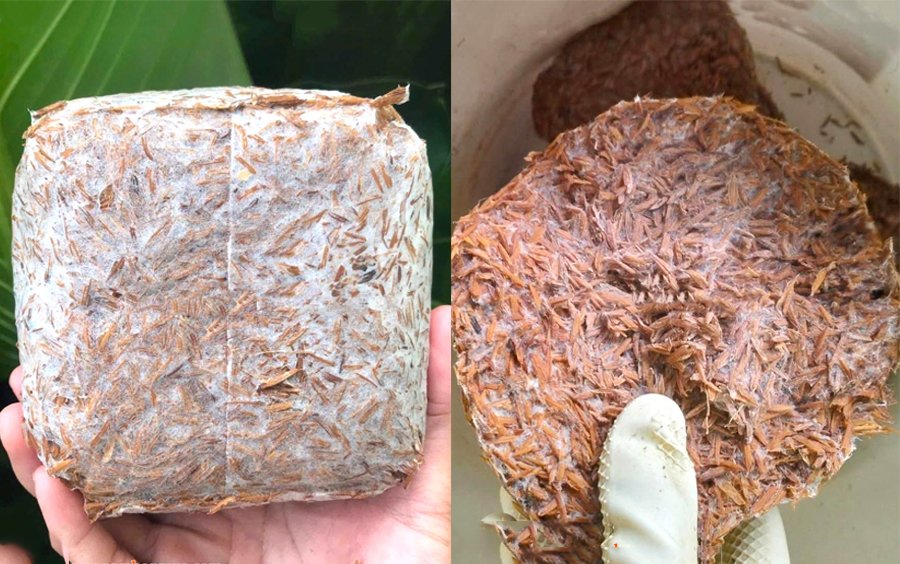
Frequently Asked Questions About Straw Mushroom Cultivation
- Which straw mushroom strains should be selected for cultivation under high-temperature conditions?
High-temperature-tolerant strains such as V85 and V35 are more suitable for summer cultivation. V85 has a suitable fruiting temperature of 26–35°C and its main fruiting season is from June to September. V35 tolerates heat better than many other strains and has a short production cycle of 23–25 days, which can help supplement the limited supply of fresh straw mushrooms during summer.
- Which straw mushroom strains should be selected during periods of low temperature?
V905 has relatively strong low-temperature tolerance and can fruit normally at 20–25°C. VP53 is also described as having relatively good low-temperature tolerance; at 18°C, fewer young fruiting bodies die.
- Which straw mushroom strains have yields suitable for commercial production?
The following strains have characteristics associated with high yield and are suitable for commercial production: V5, Bình Ưu No. 1, V905, and V91.
• V5: High yield and relatively strong tolerance to adverse conditions.
• Bình Ưu No. 1: High yield and strong tolerance to adverse conditions; large fruiting bodies, each capable of reaching 100–200 g.
• V905: High yield; in continuous two-year cultivation on cottonseed hulls + rice straw or cotton waste + rice straw, average biological efficiency reached 41.2% under the stated conditions.
• V91: Comparative cultivation trials showed a yield comparable to V23, a strain widely used in commercial production.
- Which straw mushroom strains should be selected for cultivation on rice straw?
The following strains can be cultivated on rice straw and have been described as producing good yield and quality: V23, V34, V5, Bình Ưu No. 1, V35, V905, and V531.
• V23: Uses rice straw or cotton waste.
• V34: Grows well on rice straw.
• V5: Suitable for rice straw and cotton waste.
• Bình Ưu No. 1: Can be cultivated on rice straw or cottonseed hulls.
• V35: Uses rice straw.
• V905: Uses cottonseed hulls + rice straw or cotton waste + rice straw.
• V531: When cultivated outdoors on beds using rice straw, average biological efficiency reached 21%.
- Which straw mushroom strains should be selected for cultivation on cotton waste or cottonseed hulls?
Suitable strains for cotton waste include V23, V34, V5, and V905.
• V23: Uses rice straw or cotton waste.
• V34: Grows well on cotton waste.
• V5: Suitable for rice straw and cotton waste.
• V905: Uses cotton waste + rice straw.
Suitable strains for cottonseed hulls include Bình Ưu No. 1, V35, and V905.
• Bình Ưu No. 1: Uses rice straw or cottonseed hulls.
• V35: Biological efficiency reaches 38.43% on cottonseed hulls.
• V905: Uses cottonseed hulls + rice straw; average biological efficiency reached 41.2% in continuous two-year cultivation under the described conditions.
- Which straw mushroom strains produce large, thick-fleshed, attractive fruiting bodies that are slow to open their caps?
The following strains are described as producing large, thick-fleshed, attractive fruiting bodies that are slow to open their caps: V531, Bình Ưu No. 1, V5, V23, VP53, and V91.
• V531: Large fruiting bodies, thick flesh, good eating quality, and stable traits; cap center mouse-gray with margins close to white.
• Bình Ưu No. 1: Large fruiting bodies, each capable of reaching 100–200 g; thick, durable volva; soft, smooth flesh and good flavor.
• V5: Large fruiting bodies with thick volva; slow to open its cap.
• V23: Large, egg-shaped or oval fruiting bodies; thick, tough volva; slow to open its cap; white, soft flesh and very good market quality.
• VP53: Large fruiting bodies, 15–30 g each, with the largest capable of exceeding 100 g; solitary or clustered and slow to open its cap.
• V91: Medium-sized fruiting bodies, averaging 27.17 g each, and slow to open its cap.
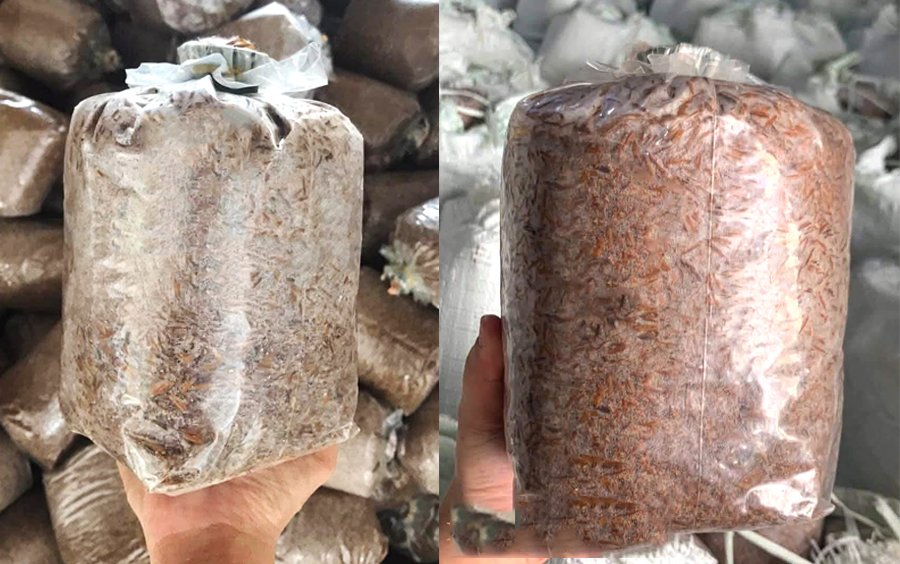
Characteristics of Each Straw Mushroom Spawn Strain
Straw Mushroom Spawn Strain V23
V23 is characterized by dark brown, large fruiting bodies that are egg-shaped or oval. The volva is thick and tough, and the cap opens slowly. The proportion of egg-shaped mushrooms is high, while the flesh is white and soft, with very good market quality.
When rice straw or cotton waste is used as the cultivation substrate, V23 produces fruiting bodies early. Fruiting begins 6–11 days after inoculation, and fruiting-body development generally takes 5–7 days. Fruiting bodies develop densely, with a high fruiting-body formation rate.
Recommended reading: Equipment for Producing Standard Straw Mushroom Spawn.
However, V23 has relatively weak tolerance to adverse conditions. It is particularly sensitive to low temperatures and dry winds, which can cause young fruiting bodies to wilt and die during the early stage. Therefore, it is not suitable for cultivation in areas with low temperatures.
Straw Mushroom Spawn Strain V34
V34 is characterized by a relatively broad optimal temperature range for mycelial growth, from 24–32°C. The temperature range for fruiting-body development is also relatively low, and normal fruiting can occur at 23–25°C.
V34 grows well on cotton waste, cottonseed hulls, rice straw, and wheat straw. The fruiting bodies are gray-black, medium-sized, with a moderately thick volva.
Recommended reading: Equipment Preparation for Proper Straw Mushroom Inoculation.
Straw Mushroom Spawn Strain V5
V5 is characterized by large, gray-black fruiting bodies with a thick volva that is slow to open. It is suitable for cultivation on rice straw and cotton waste, with high yield and relatively strong tolerance to adverse conditions.
Straw Mushroom Spawn Strain Binh Uu No. 1
Bình Ưu No. 1 has a broad temperature adaptation range. Fruiting bodies can grow and develop normally at 25–35°C. At 28–30°C, it takes 6–8 days from inoculation to fruiting and 5–6 days from the appearance of young fruiting bodies to harvest. The interval between harvest flushes is 5–7 days, and up to three flushes can be harvested.
Recommended reading: Essential Sterilization Equipment for Straw Mushroom Spawn Production.
Bình Ưu No. 1 has strong tolerance to adverse conditions and high yield. The fruiting bodies are gray-white, clustered, and large, with individual fruiting bodies capable of reaching 100–200 g. The volva is thick and resistant to splitting. The flesh is soft and smooth with good flavor, making the strain suitable for fresh consumption, drying, and canning. When cultivated on rice straw or cottonseed hulls, the mycelium grows thick and vigorous.
Straw Mushroom Spawn Strain V85
The suitable temperature for mycelial growth of V85 is 30–35°C; the suitable temperature for fruiting-body differentiation is 28–32°C; and the suitable temperature for the substrate bed is 32–38°C.
V85 can produce fruiting bodies at 26–35°C and has a fruiting season from June to September. It belongs to the high-temperature-tolerant group. Fruiting bodies are medium-sized, mouse-gray, slow to open their caps, and suitable for canning.
Straw Mushroom Spawn Strain V35
V35 is characterized by better heat tolerance than many other strains when cultivated in summer, with a production cycle of 23–25 days. It can be supplied to the market during July and August, helping supplement the limited supply of fresh mushrooms during summer. Fruiting bodies are round and uniform, with a high clustering rate, light coloration, slow cap opening, and good market quality.
When rice straw is used as the cultivation substrate, V35 has a biological efficiency of 16.6%; when cottonseed hulls are used, biological efficiency reaches 38.43%.
Straw Mushroom Spawn Strain V905
V905 has relatively strong low-temperature tolerance and can produce fruiting bodies normally at 20–25°C, with biological efficiency still reaching 25% under the stated conditions. Other strains have much greater difficulty fruiting under these conditions.
V905 is generally early-maturing, suitable for early-season cultivation, and has a short growth period. Young fruiting bodies appear approximately 5–7 days after inoculation, and the period from young fruiting body formation to cap opening and maturity is generally about 5 days.
V905 provides high yield. The fruiting bodies are medium-sized and gray-white, with a relatively thick volva. They are suitable for fresh consumption or drying.
Straw Mushroom Spawn Strain V531
V531 is characterized by an optimal mycelial growth temperature of 35°C and a suitable cultivation-environment temperature range of 18–40°C. Fruiting bodies grow singly or in clusters of 2–7.
V531 has strong resistance to contamination, large fruiting bodies, thick flesh, good eating quality, and stable traits. When cultivated outdoors on beds using rice straw, average biological efficiency reaches 21%.
Straw Mushroom Spawn Strain VP53
VP53 is characterized by large fruiting bodies weighing 15–30 g each, with the largest capable of exceeding 100 g. Fruiting bodies grow singly or in clusters and are slow to open their caps. At 18°C, fewer young fruiting bodies die, indicating relatively good low-temperature tolerance.
Straw Mushroom Spawn Strain V91
V91 produces a yield comparable to V23, a strain widely used in commercial production. The average fruiting-body weight is 27.17 g, and the caps are slow to open. After inoculation, the mycelium can normally fully colonize the bed surface in approximately 5 days.
What Conditions Are Best for Straw Mushroom Growth?
Straw mushrooms grow and develop best under high-humidity conditions with a stable air temperature of around 25°C and only a small difference between daytime and nighttime temperatures.
Below are the ideal conditions for vigorous straw mushroom growth and high yield and quality, as compiled by Làng nấm Bốn Mùa:
| Condition/Season | Temperature/Timing | Notes |
| Ideal conditions | Around 25°C; small day–night temperature difference | Cultivation can be carried out. |
| Suitable temperature for fruiting bodies | 26–33°C | If the temperature falls outside this range, mushroom yield may be affected. |
To achieve a productive, high-quality straw mushroom growing season, growers need to properly evaluate three factors: season, temperature, and strain selection. The 10 high-quality straw mushroom spawn strains that have been researched and selected, and compiled above by the VNmushrooms Farm team, provide a useful reference for selecting strains for cultivation with the goal of maintaining yield and quality.
If you have questions or are facing difficulties and want to learn more about high-yield, high-quality straw mushroom cultivation techniques, please contact the VNmushrooms Farm engineering team.
Bài viết cùng chủ đề:
-

High-Yield Straw Mushroom Growing: Part 9 – Setup & Disinfection
-

High-Yield Straw Mushrooms, Part 8: Spawn Quality & Storage
-

High-Yield Straw Mushrooms, Part 7: Grade II & III Spawn
-
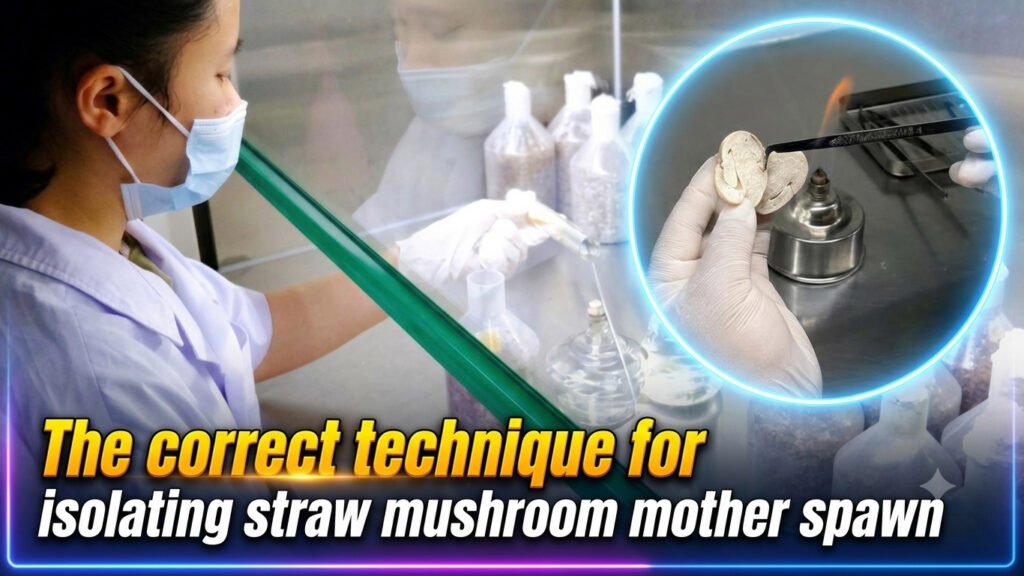
High-Yield Straw Mushrooms, Part 6: Mother Spawn Production
-
High-Yield Straw Mushrooms, Part 5: Common Chemicals Used
-

High-Yield Straw Mushrooms, Part 4: Heating, Humidity & Tools
-
High-Yield Straw Mushrooms, Part 3: Inoculation Rooms & Spawn Run
-
High-Yield Straw Mushrooms, Part 2: Spawn Sterilization Equipment
-
Straw Mushroom Growth Stages: When to Harvest for Best Yield
-

Straw Mushroom Farming: Low-Cost, High-Return Business