
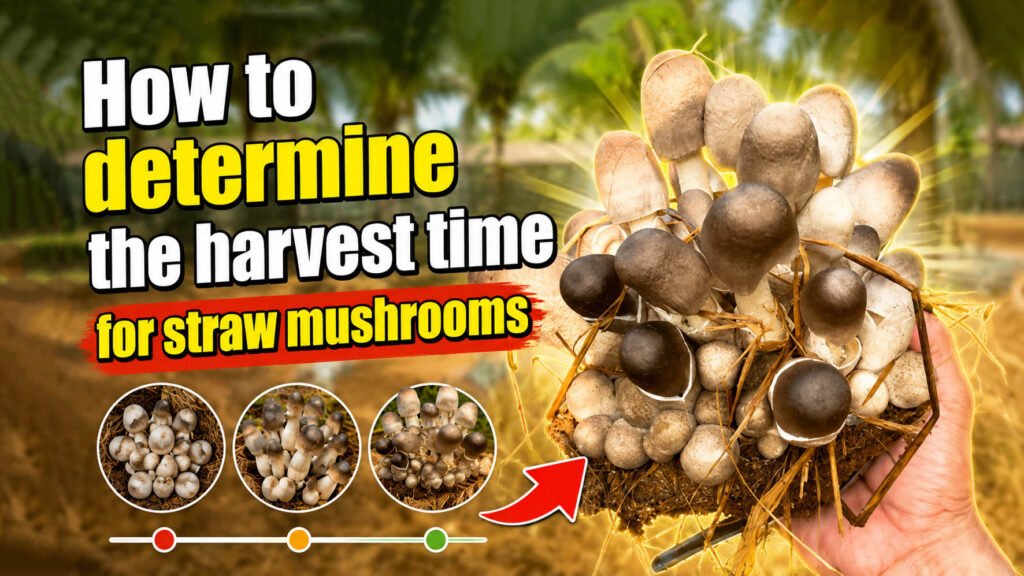
Straw Mushroom Growth Stages: When to Harvest for Best Yield
Straw mushrooms pass through six distinct growth stages, and knowing exactly how to recognize each one is what separates a grower who guesses at harvest timing from one who consistently pulls in high-quality, high-value straw mushrooms.
For most straw mushroom growers — beginners and veterans alike — the real challenge was never the growing technique itself. It’s knowing precisely when to harvest. In this article, VNmushrooms Farm details the entire biological life cycle of the straw mushroom and identifies the precise optimal harvest times to ensure growers achieve both superior quality and maximum profitability.
The 6 Growth Stages of Straw Mushrooms
-
Pinhead Stage
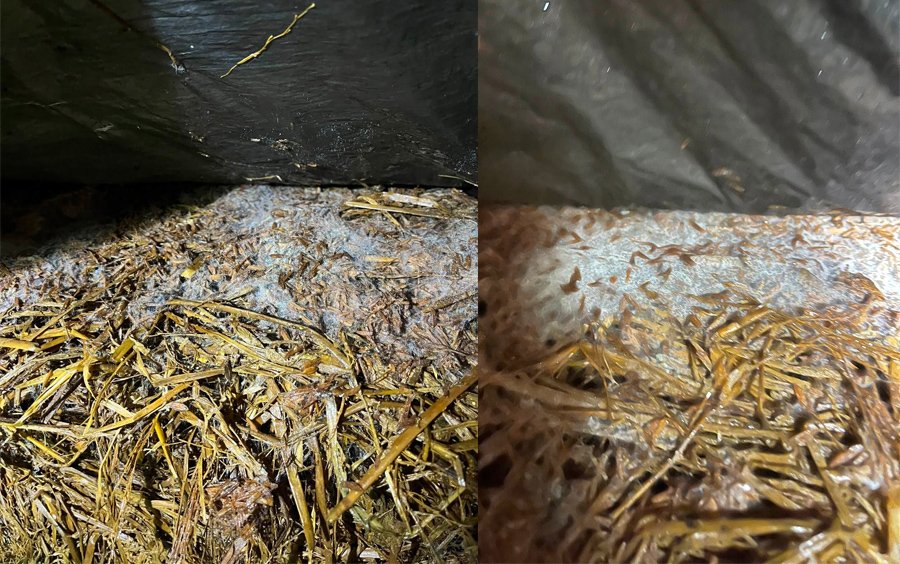
Once the straw mushroom’s mycelium knits together, it forms small white dots that push upward like tiny pinheads — hence the name.
At this point, the fruiting body is nothing more than a cluster of mycelial threads: a milky-white web bound together, covered by a thin white fuzz, and dense on the inside. The outer veil is still fairly thick, and there’s no differentiation yet between cap and stem — structurally, it’s just a small mass of fungal cells.
Note: this stage is far too early to harvest. The fruiting body hasn’t developed the mass or structure needed.
-
Small Button Stage
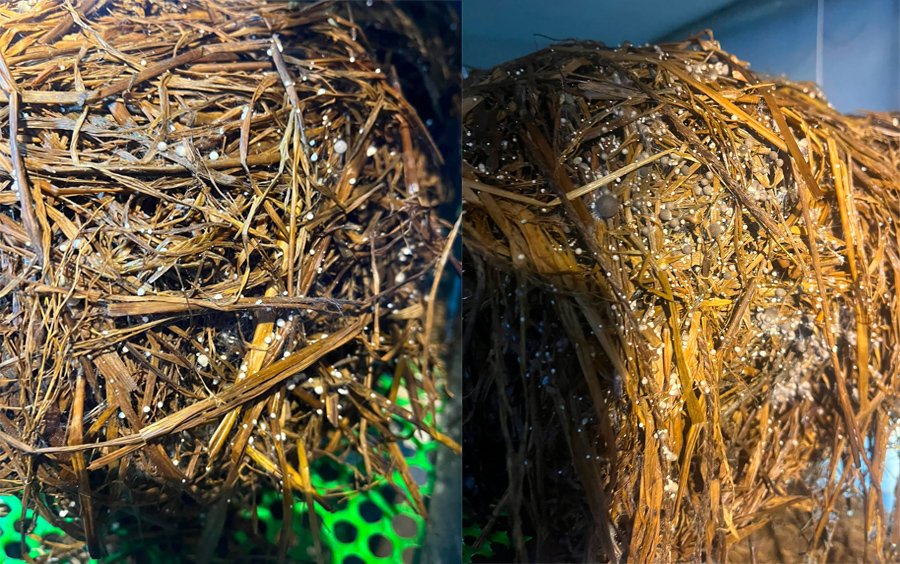
About 2–3 days after the pinhead stage, those tiny pins grow into young, rounded, slightly flattened mushrooms shaped like a small button — which gives this stage its name.
Tissue differentiation is now clearly underway. Peel back the outer veil and you’ll see a young cap with a dark gray center and white edges.
A cross-section at this stage reveals a very thin, narrow band of gills forming beneath the thick cap layer. The top of the spherical veil is dark gray, while the rest remains white.
Note: this is the earliest harvest window for straw mushrooms, yielding premium, unopened “button” mushrooms with a firm texture and attractive shape. These command the highest prices and are typically reserved for the premium straw mushroom segment.
-
Button Stage
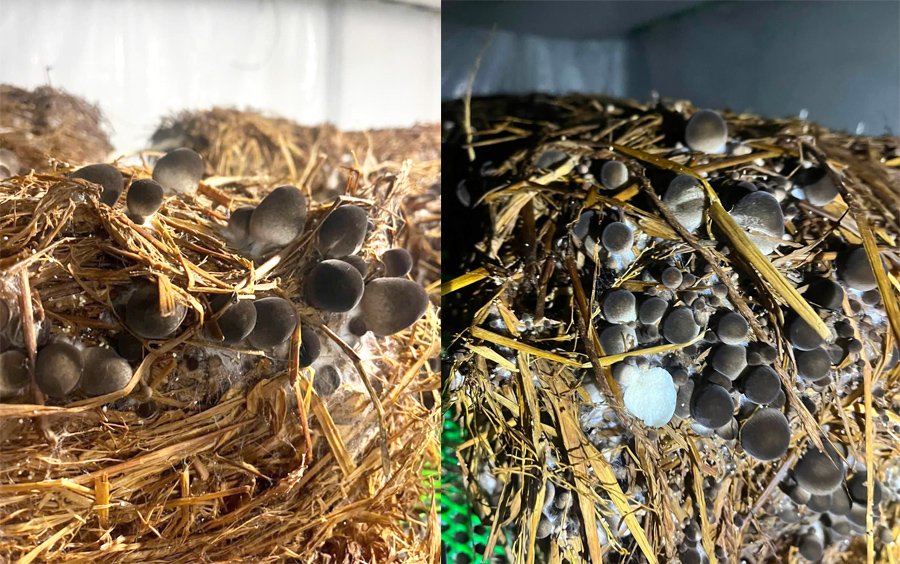
As the cap, gills, and stem continue forming, the fruiting body keeps growing and enters the button stage, which lasts roughly 1–2 days.
At this stage, the entire fruiting body is still fully enclosed by the veil, with the cap completely hidden inside.
Note: this is the most common commercial harvest point for straw mushrooms, striking the best balance between size, weight, and quality relative to price.
-
Egg Stage
Within a day or two of the button stage, the fruiting body grows rapidly and takes on an oval, egg-like shape — hence “egg stage.”
The cap begins pushing up against the veil. The lower part of the veil develops into a cup-shaped volva that wraps around the base of the stem, while the stem itself still hasn’t emerged.
At this point, spores haven’t yet formed on the gills beneath the cap. The top of the fruiting body takes on a silvery-gray sheen, gradually lightening toward the base, which is nearly white.
Note: this is the last possible point to harvest straw mushrooms — growers need to pick before the cap starts breaking through the veil.
-
Elongation Stage
Just hours after the egg stage, the stem elongates rapidly — hence the name.
Growth at this stage is concentrated almost entirely in the stem and cap. The veil stops developing, and what remains at the base forms the volva. Stem elongation is concentrated in the upper half — the active growth zone — bringing the stem close to its mature length.
During this stretch, the spore-producing layer on the gills undergoes major changes. As spores form and accumulate, the gills shift from milky white to pale pink.
Note: straw mushrooms largely lose their commercial value at this stage — the cap has opened, and the flesh’s texture is no longer suitable for fresh sale.
-
Mature Stage
After elongation, the fruiting body enters the mature stage, which lasts about 1–1.5 days. The cap takes on a bell shape before gradually flattening out. Its surface turns silvery gray, marked with dark gray streaks.
The gills shift from pale pink to flesh-toned, and finally dark brown — the color of fully mature spores. As the gills turn pale pink, spores are released.
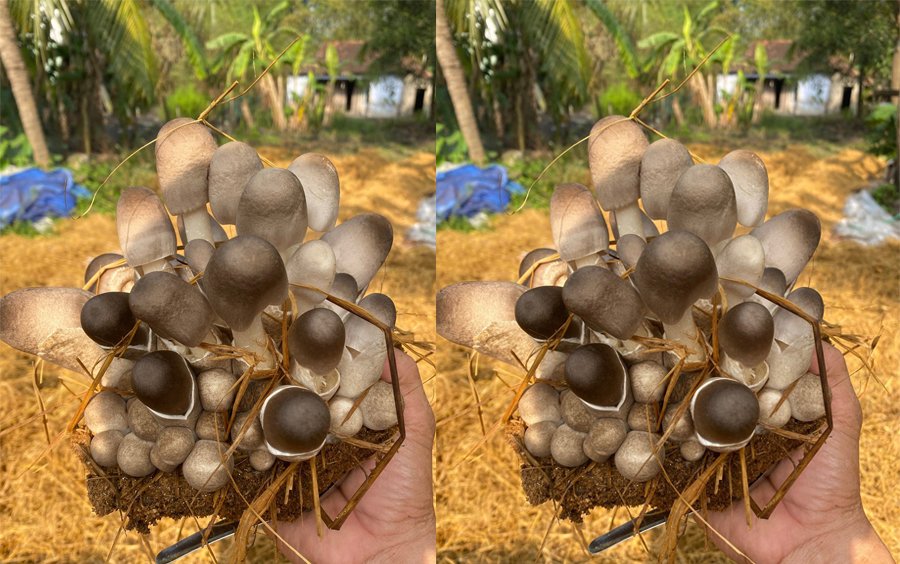
Spore release lasts about a day, completing the straw mushroom’s life cycle. Under the right environmental conditions, those spores germinate and start a new growth cycle.
Note: at this stage, straw mushrooms have value only for spawn or spore collection — no commercial value remains.
Why Harvest Timing Determines Straw Mushroom Quality
The physical markers at each stage don’t just determine harvest timing — they determine the commercial value of every batch of straw mushrooms.
Of the six growth stages, only two — the small button and button stages — produce the highest-quality fruiting bodies.
Reference: Straw Mushroom Farming: Low-Cost, High-Return Business
At these two stages, the fruiting body is still fully enclosed by its veil, with a dense, firm internal structure. That’s exactly what gives commercial-grade straw mushrooms their crisp, sweet bite and their strong shelf life and shipping durability.
Once straw mushrooms move into the egg stage — and especially the elongation stage — the cap starts pushing through the veil and the stem grows rapidly. The tissue structure changes along with it: the mushroom becomes spongier, bruises more easily, and its shelf life drops sharply.
Straw Mushroom Farming: Frequently Asked Questions
What’s the best growth stage to harvest straw mushrooms?
The small button and button stages are the optimal harvest points, delivering the highest commercial value. At these stages, the fruiting body is still fully enclosed by its veil, giving it a firm texture, a crisp-sweet bite, and top-tier quality.
Is it a problem to leave straw mushrooms unharvested too long?
Yes. Once the fruiting body moves into the egg, elongation, and mature stages, the cap opens up out of the veil, the tissue turns spongier and bruises more easily, and the mushroom loses its value as a fresh product. By the mature stage, it’s only useful for spawn or spore collection.
Does dried straw mushroom retain the same nutrition as fresh?
Yes — dried straw mushrooms hold onto nutritional value comparable to fresh ones, and drying is also a common, practical way to extend shelf life and simplify transport.
How do you tell a young (button) straw mushroom from an older one?
At the small button and button stages, the veil is still fully intact, and the shape is round or slightly flattened, like a small button, with a dense, firm interior. Once the mushroom is older — from the egg stage onward — the cap starts pushing through the veil, and by the mature stage the cap has flattened out completely with gills that have turned dark brown. That visual shift is the easiest way to tell them apart at a glance.
How long do fresh straw mushrooms keep after harvest?
Fresh straw mushrooms keep best for 4–5 days in the refrigerator. Don’t use them if you notice warning signs like a mushy texture, discoloration, or a slimy film.
Straw mushrooms move through six fruiting-body stages — pinhead, small button, button, egg, elongation, and mature. Mastering these six stages is the key that lets any straw mushroom grower, from hobbyist to large-scale operation, control harvest timing, optimize quality, and boost income.
Bài viết cùng chủ đề:
-
Growing Straw Mushrooms on Cotton Waste: Outdoor & Indoor
-
Growing Straw Mushrooms on Cottonseed Hulls: Outdoor & Indoor
-
10 High-Quality Straw Mushroom Strains: Selection Guide
-
High-Yield Straw Mushroom Growing: Part 9 – Setup & Disinfection
-
High-Yield Straw Mushrooms, Part 8: Spawn Quality & Storage
-
High-Yield Straw Mushrooms, Part 7: Grade II & III Spawn
-
High-Yield Straw Mushrooms, Part 6: Mother Spawn Production
-

High-Yield Straw Mushrooms, Part 5: Common Chemicals Used
-

High-Yield Straw Mushrooms, Part 4: Heating, Humidity & Tools
-
High-Yield Straw Mushrooms, Part 3: Inoculation Rooms & Spawn Run
-
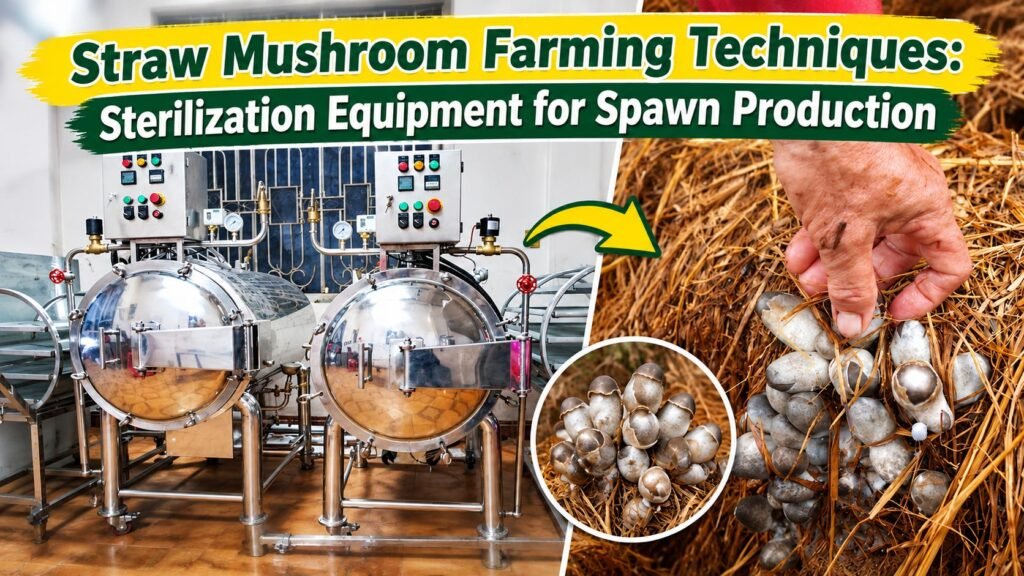
High-Yield Straw Mushrooms, Part 2: Spawn Sterilization Equipment
-

Straw Mushroom Farming: Low-Cost, High-Return Business