
Growing Straw Mushrooms on Cotton Waste: Outdoor & Indoor
Cotton waste is a cellulose-rich material and a favorite medium for straw mushroom mycelium to grow in. That’s why growing straw mushrooms on cotton waste typically delivers higher yields than other natural fiber materials. There are 2 ways to grow straw mushrooms on cotton waste: outdoors and indoors. In this guide, VNmushrooms Farm walks through both methods in detail.
Author: Phan Đình Duy — Edible & Medicinal Mushroom Specialist. Content Advisor at VNmushrooms Farm.
Here’s a quick comparison of the 2 methods for growing straw mushrooms on cotton waste — indoors and outdoors — in Table 1:
| Criteria | Outdoor Growing | Indoor Growing |
| Growing temperature | Stable average daily temperature above 23°C | Actively controlled in the room (30–32°C for fruiting) |
| Material moisture | Pre-moistened with lime water | 70–75% when loading the shelves; 65–70% at inoculation |
| Spawn rate / inoculation method | Scatter spawn evenly around and over the surface of the material | 2.5–3% of the dry weight of the material |
| Covering after inoculation | Fine soil (~1 cm) + plastic sheeting + straw | Clean newspaper + plastic sheeting |
| Time to fruiting | Pinheads appear after 4–5 days | Germination in 24 hours; bed fully colonized in 5–7 days |
| Key management principle | Reduce heat – add moisture – ventilate – shade | Steam sterilization at 65°C (4–6 hours); mist 1–2 times a day |
Table 1: Comparing 2 methods for growing straw mushrooms on cotton waste.
Read more: A Complete Guide to Growing Straw Mushrooms on Cottonseed Hulls the Right Way.
Growing Straw Mushrooms on Cotton Waste Outdoors
Growing straw mushrooms outdoors on cotton waste is typically done when the average temperature is stably above 23°C. Before you start, choose a site with fertile soil and easy irrigation, clear out the weeds, and dig drainage ditches.
VNmushrooms Farm lays out the bed specifications for growing straw mushrooms on cotton waste outdoors in Table 2:
| Item | Specification |
| Total width of bed + ditch | 2 m |
| Bed surface | 1.6 m wide |
| Ditch | 0.4 m wide |
| Bed orientation | North–south |
| Shallow trenches along the bed | Oriented east–west, 35 cm wide, 100 cm long, leaving a 35 cm gap. Then repeat shallow trenches of the same dimensions down the bed. |
Table 2: Bed specifications for growing straw mushrooms on cotton waste outdoors.
How to Prepare Cotton Waste for Outdoor Growing
Use lime at a rate of 4 kg per 100 kg of cotton waste, and use the lime water to pre-moisten the cotton. After soaking, let the excess water drain off, then pack the material into shallow trenches 35 cm wide and 100 cm long, shaping it into a tortoise-shell dome. The thickness of the material layer depends on the temperature, usually around 15–20 cm.
Reference: 10 High-Quality Straw Mushroom Strains: Selection Guide.
How to Inoculate the Spawn and Run the Mycelium
- When inoculating, scatter the spawn evenly around and over the surface of the material, then press down lightly so the spawn makes good contact with the substrate.
- After inoculation, cover with a layer of well-composted fine soil about 1 cm thick, then add plastic sheeting and straw on top to incubate the mycelium.
- After 2–3 days under the plastic sheeting, once the straw mushroom’s cobweb-like mycelium shows up on the surface, set up a small arched frame to increase oxygen, helping the mycelium grow deep into the substrate and spread vigorously through all the material.
- Pinheads appear after 4–5 days. If you notice the material drying out before fruiting bodies form, or when the fruiting bodies darken, you can water along the trenches.
Things to Watch When Growing Straw Mushrooms on Cotton Waste Outdoors
- Because the outdoor small-dome setup for growing straw mushrooms on cotton waste is typically used in the high-temperature season, follow this management principle: “reduce heat – add moisture – ventilate – shade.”
- When harvesting, avoid letting wind blow directly into the dome, which creates a moisture imbalance that can kill the mushrooms. After the first flush, add water as needed depending on how moist the material is, then keep managing the bed for the second flush.
Read more: High-Yield Straw Mushroom Growing: Part 9 – Setup & Disinfection.
Growing Straw Mushrooms on Cotton Waste Indoors
Step 1: Prepare the Material
Soak the cotton waste in dissolved lime water. Once the material has absorbed enough water, lift it out and set it on a clean surface to drain until moisture reaches 70%–75%, then tear the cotton apart to loosen it and load it onto the growing shelves to a height of about 15–20 cm.
You can also lay it out in a wave pattern, with a wave crest roughly every 35 cm — crests about 15 cm high and troughs about 5 cm.
Step 2: Sterilize the Grow Room
Once the material is loaded, pipe steam into the grow room until the room temperature reaches 65°C, and hold it there for 4–6 hours to sterilize the space, eliminate insects and contaminant microbes, and kick-start fermentation of the material.
After treatment, let the room temperature come down naturally.
Step 3: Inoculate the Spawn
Once the material’s temperature drops to around 30°C, it’s time to inoculate. At this point, the material’s moisture should be 65%–70%.
Use spawn at 2.5%–3% of the dry weight of the material. Scatter it evenly over the surface of the material, then cover with a layer of clean newspaper (ideally sun-dried for 2–3 days beforehand), then add plastic sheeting on top.
Step 4: Care After Inoculation
After inoculation, use a spray bottle every day to mist water into the air in the room and onto all four walls 1–2 times, to raise air humidity and keep the material moist.
During this stage, growers should hold the indoor growing conditions close to those in Table 3:
| Monitoring Indicator | Value |
| Material surface temperature | No higher than 36°C |
| Temperature inside the material | No higher than 40°C |
| Mycelium germination | Within 24 hours |
| Mycelium fully colonizing the bed | After 5–7 days |
| Fruiting stage — room temperature | 30–32°C |
| Fruiting stage — relative air humidity | 85%–90% |
Table 3: Environmental conditions for growing straw mushrooms on cotton waste indoors.
Straw Mushroom Farming on Cotton Waste: Frequently Asked Questions
- Do I need to add extra ingredients like bran or manure when growing straw mushrooms on cotton waste?
No. When growing straw mushrooms on cotton waste, the mycelium grows quickly, and no extra supplements are needed.
- When is the right time to grow straw mushrooms on cotton waste outdoors?
Outdoor growing on cotton waste is typically done when the stable average daily temperature is above 23°C.
- What should I do if the growing material dries out?
If the material dries out while growing straw mushrooms on cotton waste outdoors, you can water along the trenches. After the first flush, add water as needed depending on how moist the material is, then keep managing the bed for the second flush.
- What should I watch for during harvest so young mushrooms don’t die?
When harvesting straw mushrooms grown outdoors on cotton waste, avoid letting wind blow directly into the dome, which creates a moisture imbalance that can kill the mushrooms.
- My area is cooler than 23°C — can I still grow straw mushrooms on cotton waste?
Outdoor growing on cotton waste is meant for periods when the average temperature stays above 23°C. In cooler conditions, indoor growing is the better fit, since you can control the room temperature directly (around 30–32°C for fruiting) instead of depending on the weather.
Whether you grow outdoors or indoors, cotton waste is a cellulose-rich material that helps straw mushroom mycelium grow fast without any extra supplements. You can also readily use other local agricultural byproducts to grow straw mushrooms, such as:
- Growing straw mushrooms on rice straw.
- Growing straw mushrooms on cotton waste.
- Growing straw mushrooms on corn stalks (cobs).
- Growing straw mushrooms on sugarcane bagasse.
- Growing straw mushrooms on soybean stalks.
- Growing straw mushrooms on wheat straw.
- Growing straw mushrooms on mixed materials.
- Growing straw mushrooms on cottonseed hulls.
The VNmushrooms Farm engineering team will walk through the growing process for each of the methods above in upcoming guides. Growers need to master the mixing formulas and technical thresholds — following the process correctly leads to high yield and good quality when growing straw mushrooms.
Bài viết cùng chủ đề:
-
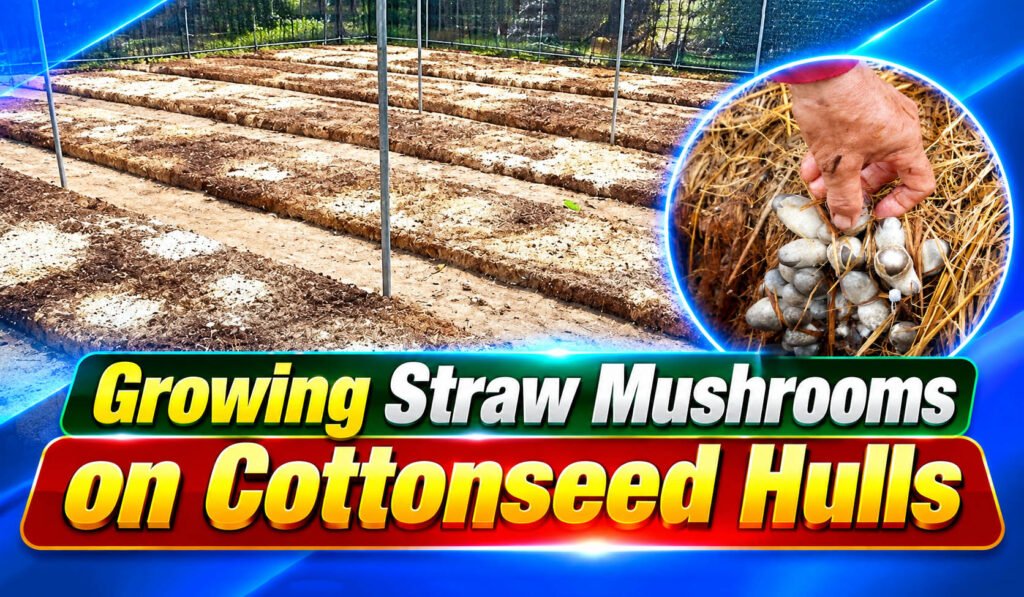
Growing Straw Mushrooms on Cottonseed Hulls: Outdoor & Indoor
-
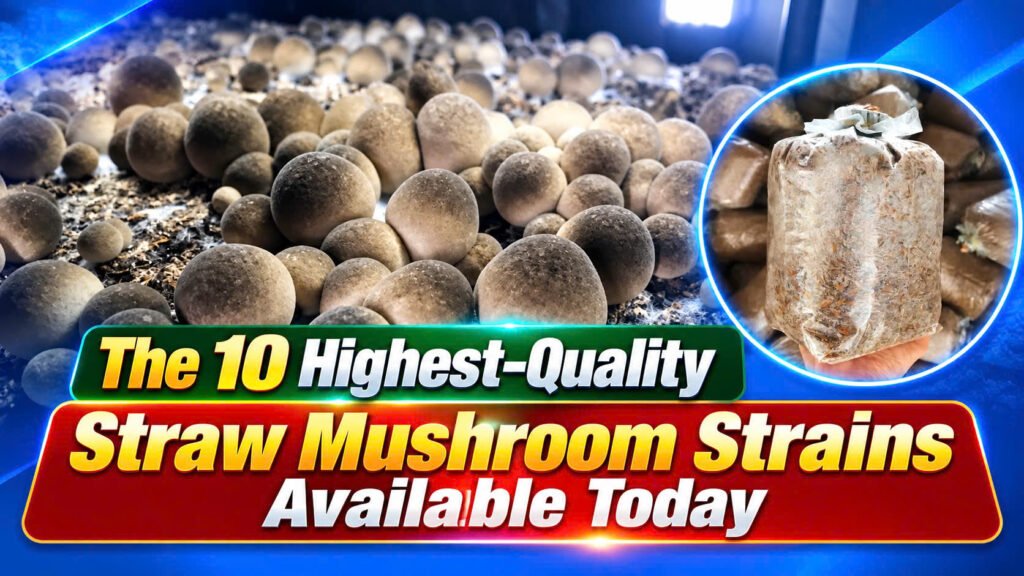
10 High-Quality Straw Mushroom Strains: Selection Guide
-
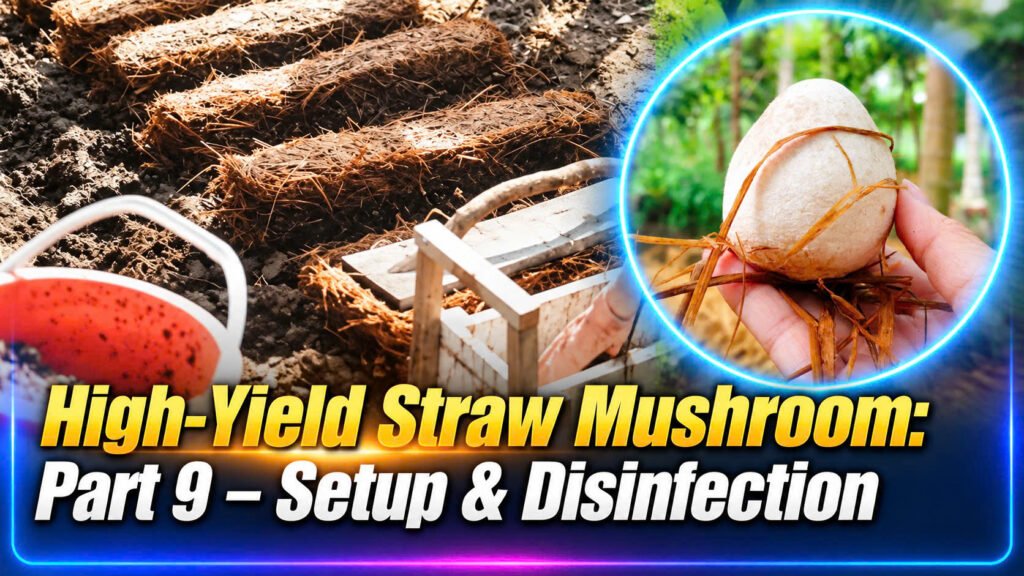
High-Yield Straw Mushroom Growing: Part 9 – Setup & Disinfection
-
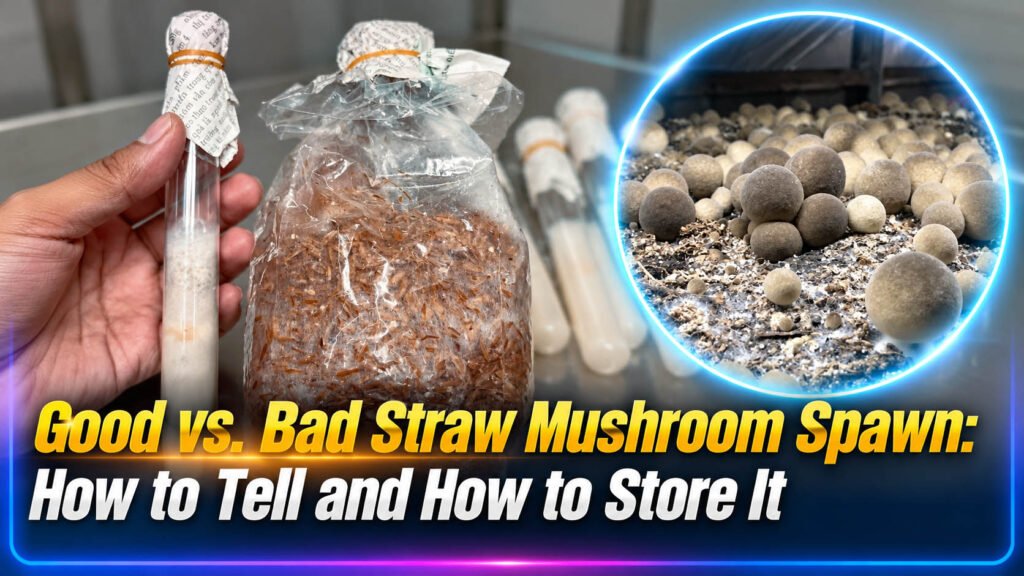
High-Yield Straw Mushrooms, Part 8: Spawn Quality & Storage
-
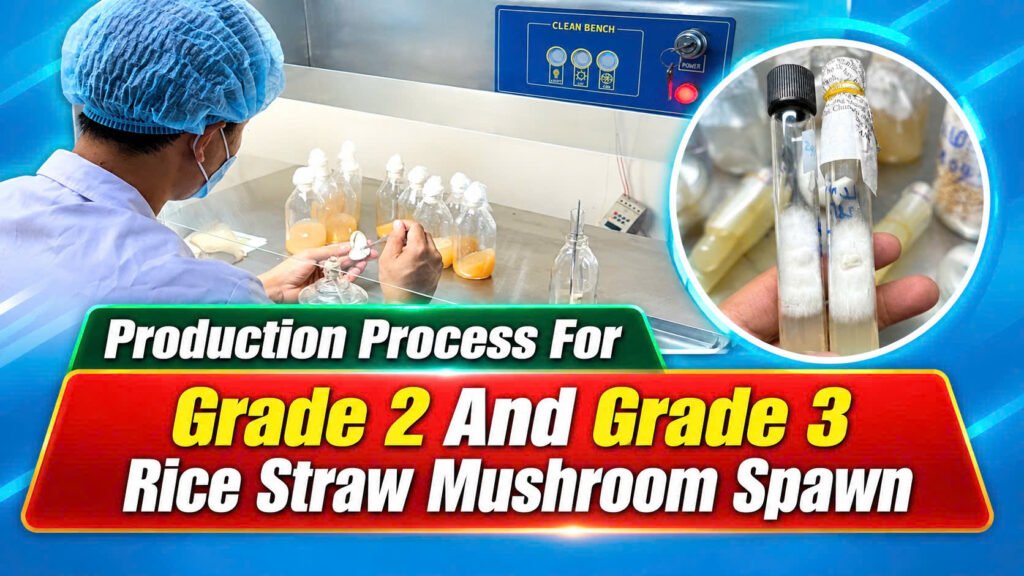
High-Yield Straw Mushrooms, Part 7: Grade II & III Spawn
-
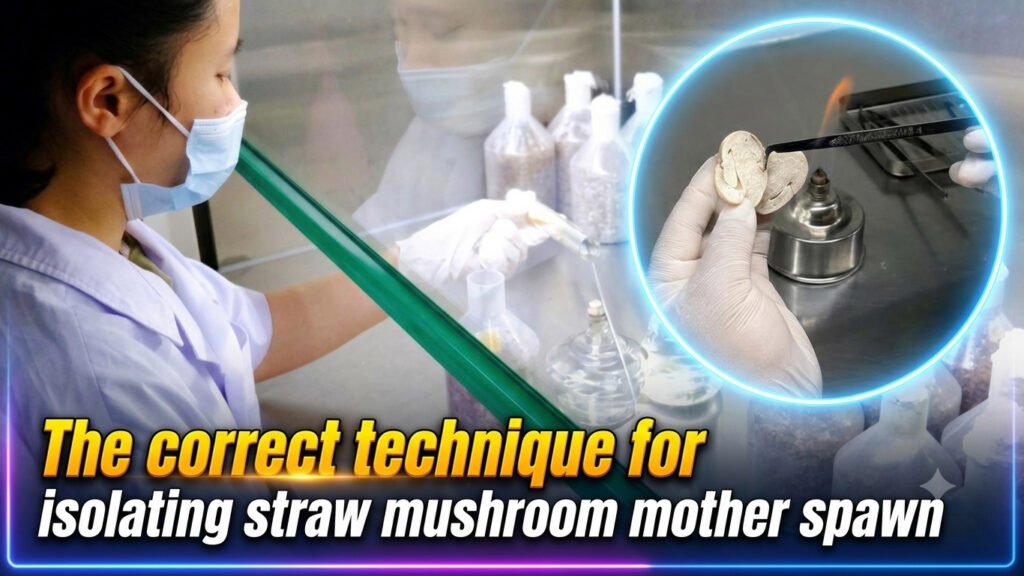
High-Yield Straw Mushrooms, Part 6: Mother Spawn Production
-
High-Yield Straw Mushrooms, Part 5: Common Chemicals Used
-
High-Yield Straw Mushrooms, Part 4: Heating, Humidity & Tools
-
High-Yield Straw Mushrooms, Part 3: Inoculation Rooms & Spawn Run
-
High-Yield Straw Mushrooms, Part 2: Spawn Sterilization Equipment
-
Straw Mushroom Growth Stages: When to Harvest for Best Yield
-

Straw Mushroom Farming: Low-Cost, High-Return Business