
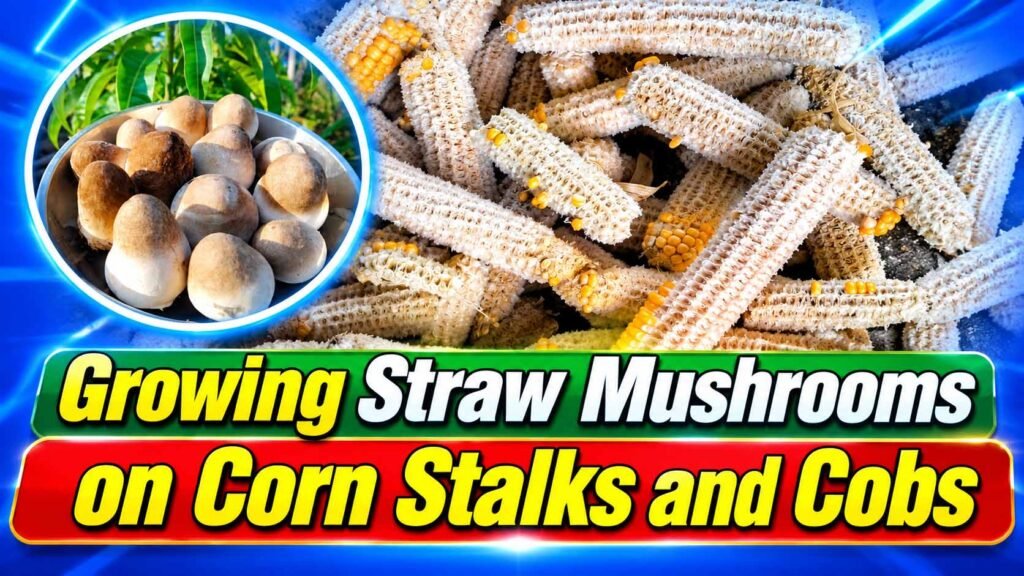
Growing Straw Mushrooms on Corn Stalks and Cobs
In regions with large corn-growing areas, intercropping straw mushrooms in corn fields can significantly boost economic returns. In this guide, VNmushrooms Farm walks through an effective, high-yield method for growing straw mushrooms on corn stalks and cobs.
Author: Võ Thị Xuân — Edible & Medicinal Mushroom Specialist. Content Advisor at VNmushrooms Farm.
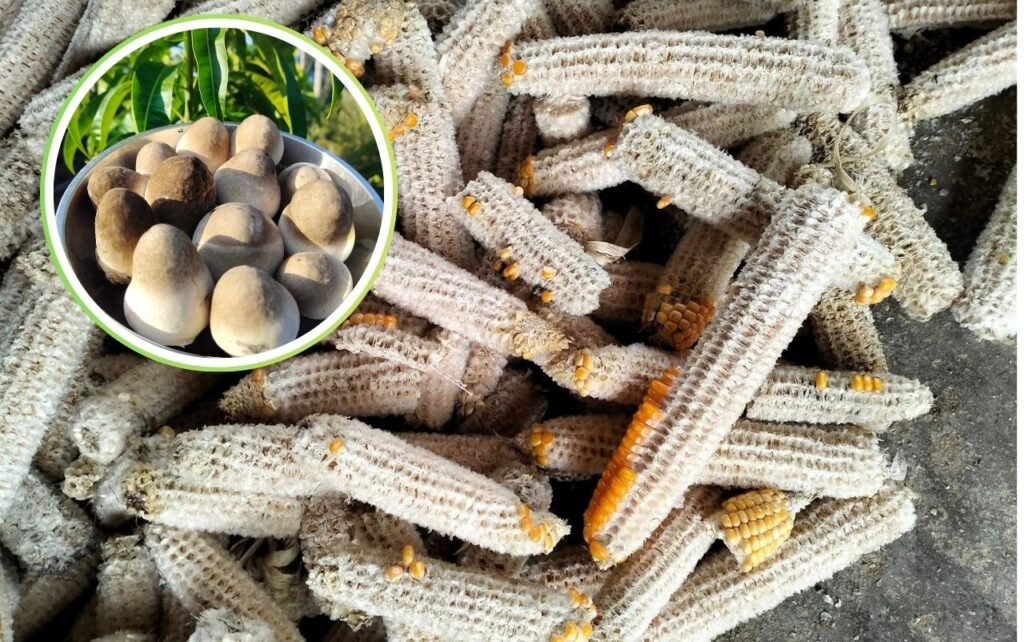
Growing Straw mushrooms on corn stalks and cobs alone doesn’t deliver strong results, so growers should blend them with other materials. Corn stalks are high in carbon, relatively low in nitrogen, and rich in sugars; and although their pH is above 7, it still doesn’t meet the growth requirements of straw mushrooms.
To get high yield and strong results from growing Straw mushrooms on corn stalks and cobs, VNmushrooms Farm recommends following the steps below in order:
Step 1: Choose a Suitable Growing Site
To make the most of locally available material, choose corn fields on higher ground with convenient water access and soil of average fertility or better.
During planting, growers also need to make sure of the following 4 factors so that intercropping straw mushrooms in the corn field delivers good yield and returns:
- For spring corn, use the standard planting method: apply a full base fertilizer before sowing, water it in initially, and plow and harrow the soil flat. Sow with 66 cm between rows and 33–40 cm between plants, planting about 2,500–3,000 plants per 667 m².
- For summer corn, you can sow in a wide-row/narrow-row pattern: the 66 cm wide rows are used for growing mushrooms, while the 45 cm narrow rows are not; with 25 cm between plants, sow about 4,800 plants per 667 m². You can sow in furrows or in holes.
- Once the corn plants reach about 1 m tall, make a straw mushroom bed for every 2 rows of corn. Mound the soil from between the rows up to both sides to form beds 50–60 cm wide, 15–20 cm deep, and about 10 m long.
- 3–4 days before inoculating the straw mushroom spawn, soak the bed thoroughly with water. Once the soil surface is slightly firm, sprinkle on a layer of lime powder to sterilize it, after which you can add the material and inoculate.
Step 2: Mix the Substrate and Inoculate the Spawn
The substrate formula for growing straw mushrooms on corn stalks and cobs is: corn stalk powder 46%, cottonseed hulls 45%, cornmeal 3%, soybean meal 3%, phosphate fertilizer 3%, plus an additional 5% lime.
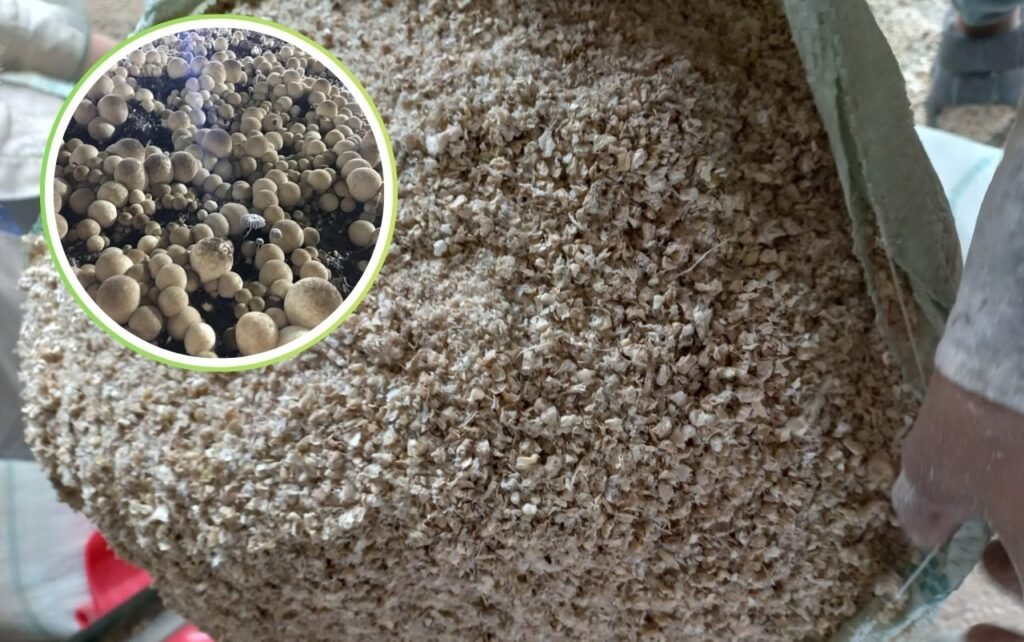
The substrate needs to be composted and fermented. After fermentation, spread it evenly over the bed at about 15 kg/m², shaping the surface into a tortoise-shell profile — slightly raised in the middle and sloping down toward both sides.
Then scatter the spawn evenly over the surface, using slightly more in the area 5–6 cm in from the edge, pat it down lightly to firm it up, and cover with plastic sheeting and a layer of straw.
Step 3: Manage the Bed During Growing
After inoculation, the temperature inside the substrate should be held at around 35°C. If it climbs above 35°C, open the plastic sheeting to ventilate and release heat.
From inoculation to fruiting takes about 8–11 days. Once the straw mushrooms begin forming fruiting bodies, they grow very quickly. During this stage, the ideal temperature is around 32°C, with relative air humidity of 85%–90%.
The biggest challenge at this stage is managing water. If the substrate’s water content is too high, aeration suffers and the substrate temperature rises slowly, which hurts mycelium growth. If the substrate’s water content falls below 60%, the straw mushrooms wilt and die, cutting yield.
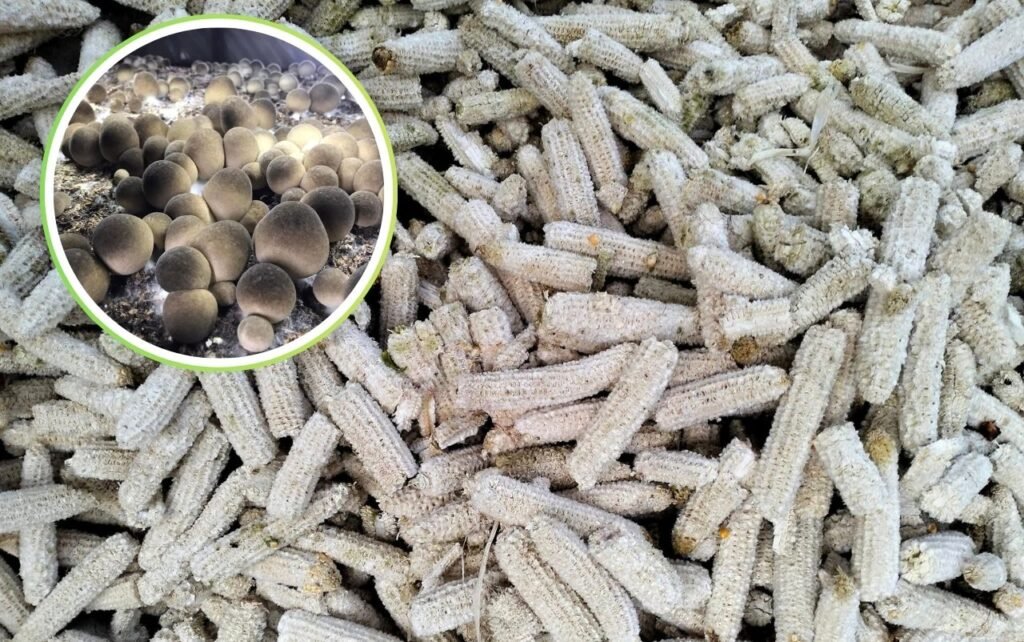
That’s why growers need to pay special attention to substrate moisture, following the principle of misting lightly but often — typically 3–5 misting sessions a day works well.
Spray water should be close to ambient temperature. You should also check the substrate’s pH regularly; the requirement is typically a pH of 8–9, and if it drops below 8, you can spray lime water to adjust it.
In rural areas, corn stalks and cobs are usually used just as fuel or composted into fertilizer, which gives them relatively low value. Growing straw mushrooms on corn stalks and cobs is a way to put an existing byproduct to work — cutting waste and boosting income.
You can also readily use other local agricultural byproducts to grow straw mushrooms, such as:
- Growing straw mushrooms on rice straw.
- Growing straw mushrooms on cotton waste.
- Growing straw mushrooms on corn stalks (cobs).
- Growing straw mushrooms on sugarcane bagasse.
- Growing straw mushrooms on soybean stalks.
- Growing straw mushrooms on wheat straw.
- Growing straw mushrooms on mixed materials.
- Growing straw mushrooms on cottonseed hulls.
The VNmushrooms Farm engineering team will walk through the growing process for each of the methods above in upcoming guides. Growers need to master the mixing formulas and technical thresholds — following the process correctly leads to high yield and good quality when growing straw mushrooms.
Bài viết cùng chủ đề:
-
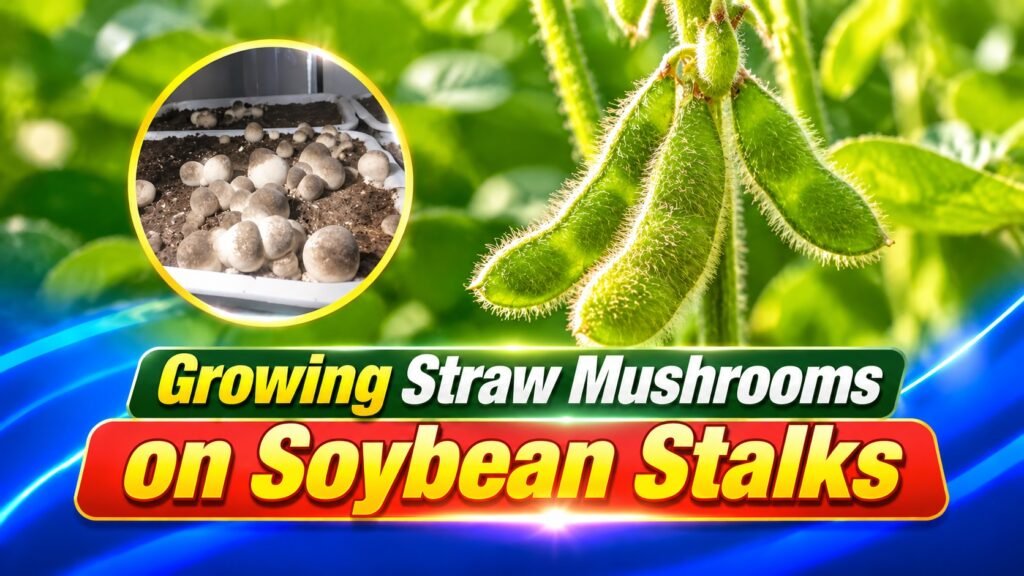
Growing Straw Mushrooms on Soybean Stalks
-
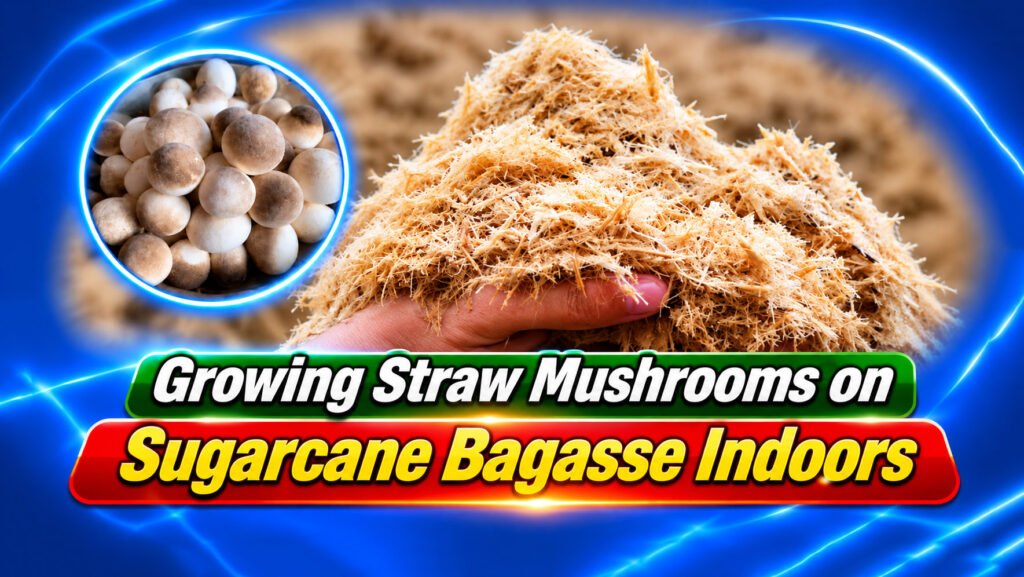
Growing Straw Mushrooms on Sugarcane Bagasse Indoors
-
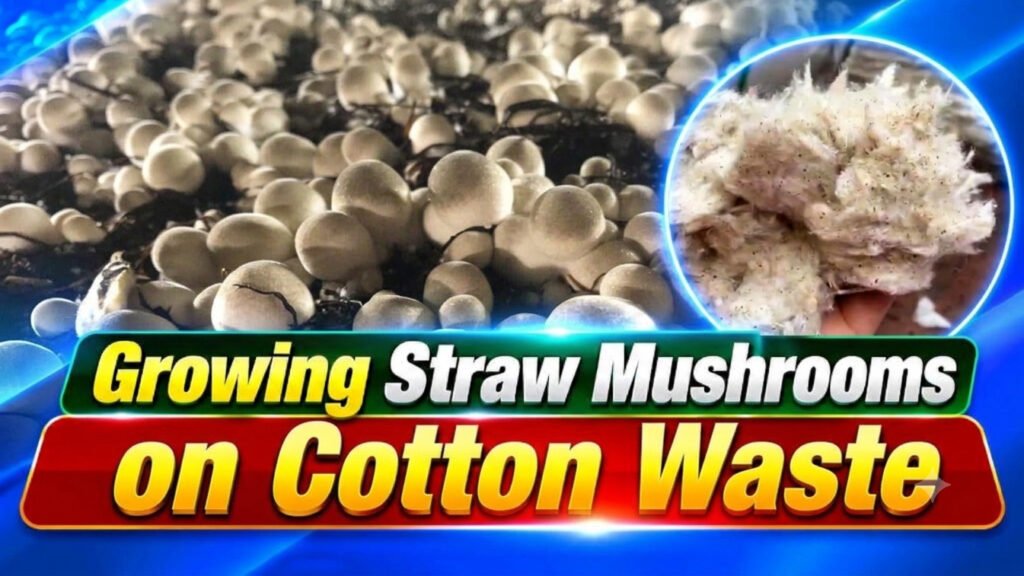
Growing Straw Mushrooms on Cotton Waste: Outdoor & Indoor
-
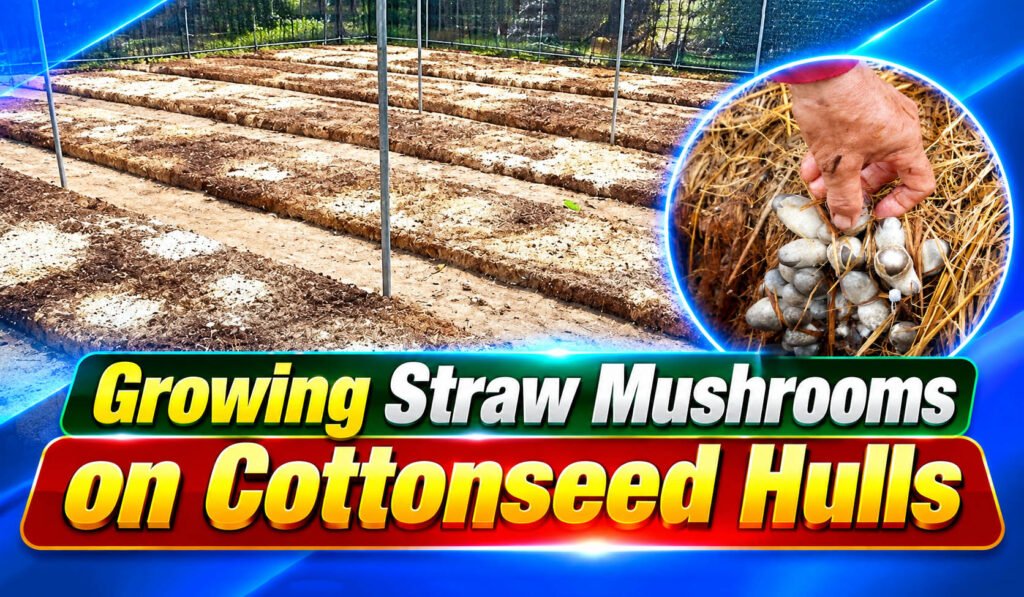
Growing Straw Mushrooms on Cottonseed Hulls: Outdoor & Indoor
-
10 High-Quality Straw Mushroom Strains: Selection Guide
-
High-Yield Straw Mushroom Growing: Part 9 – Setup & Disinfection
-
High-Yield Straw Mushrooms, Part 8: Spawn Quality & Storage
-
High-Yield Straw Mushrooms, Part 7: Grade II & III Spawn
-
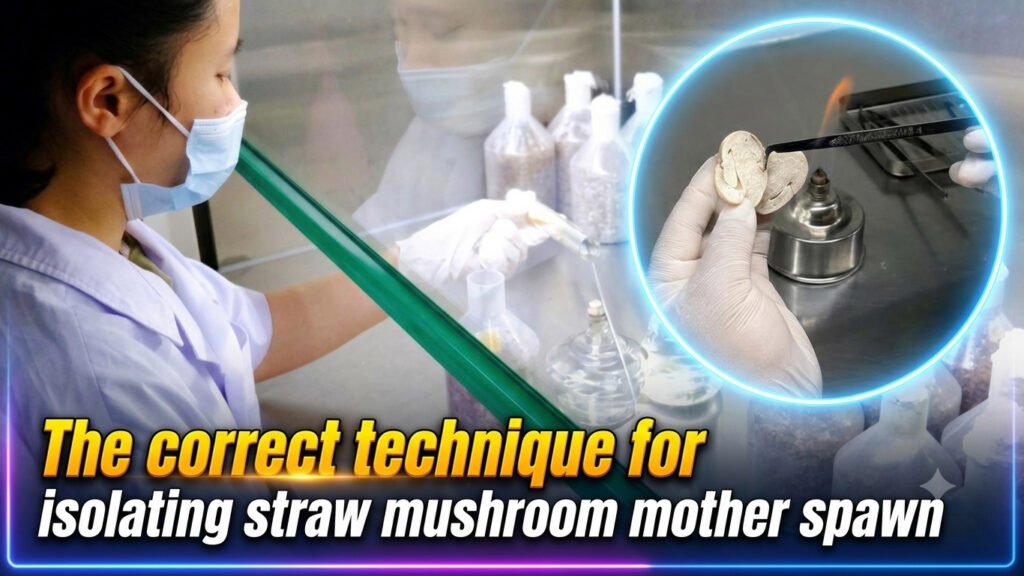
High-Yield Straw Mushrooms, Part 6: Mother Spawn Production
-
High-Yield Straw Mushrooms, Part 5: Common Chemicals Used
-

High-Yield Straw Mushrooms, Part 4: Heating, Humidity & Tools
-
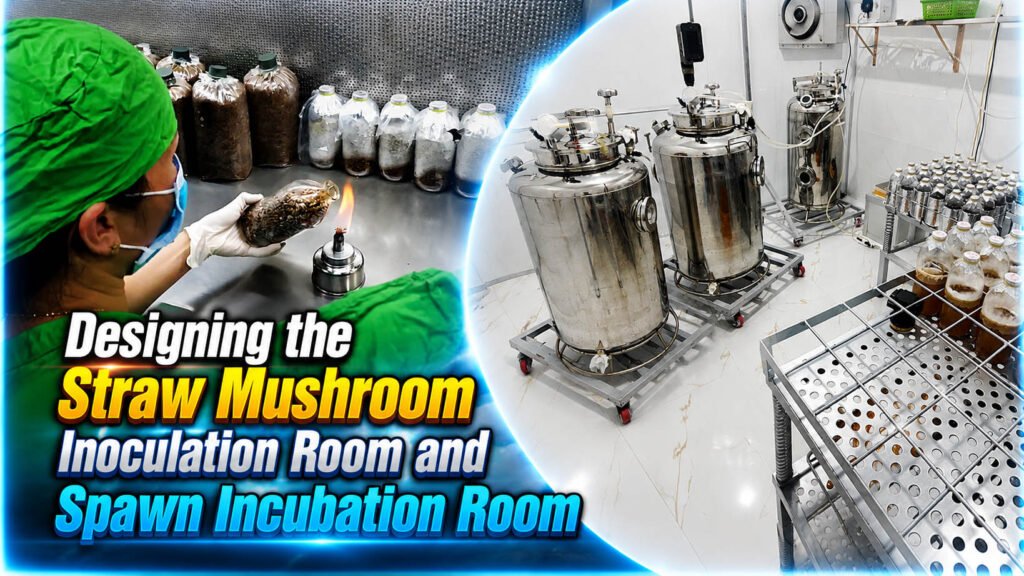
High-Yield Straw Mushrooms, Part 3: Inoculation Rooms & Spawn Run
-
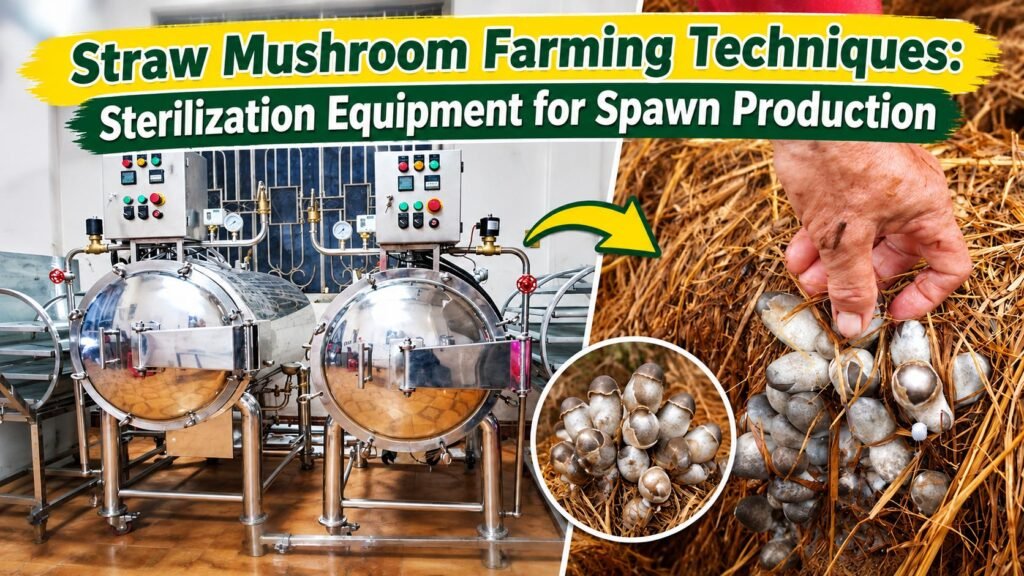
High-Yield Straw Mushrooms, Part 2: Spawn Sterilization Equipment
-
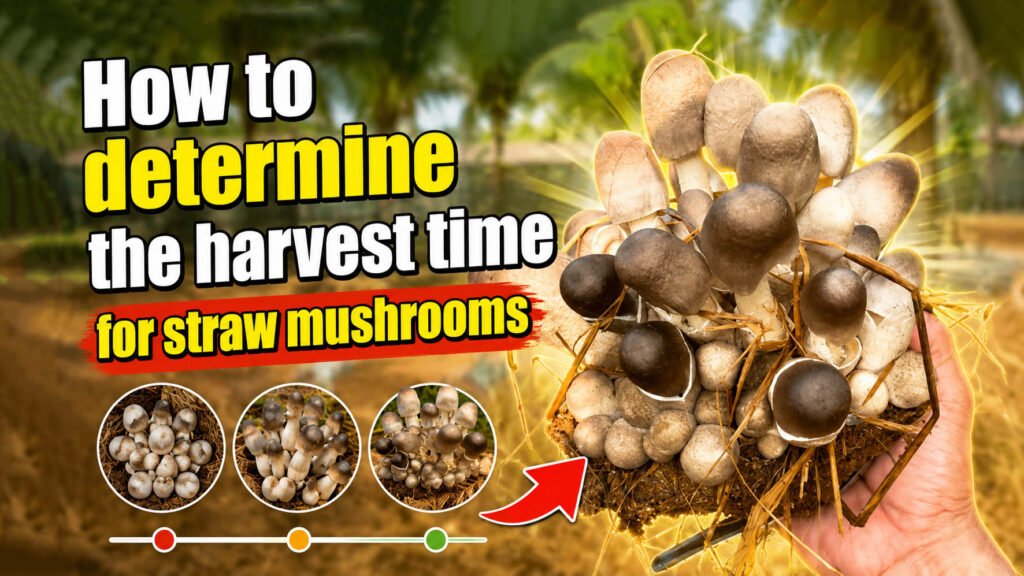
Straw Mushroom Growth Stages: When to Harvest for Best Yield
-

Straw Mushroom Farming: Low-Cost, High-Return Business